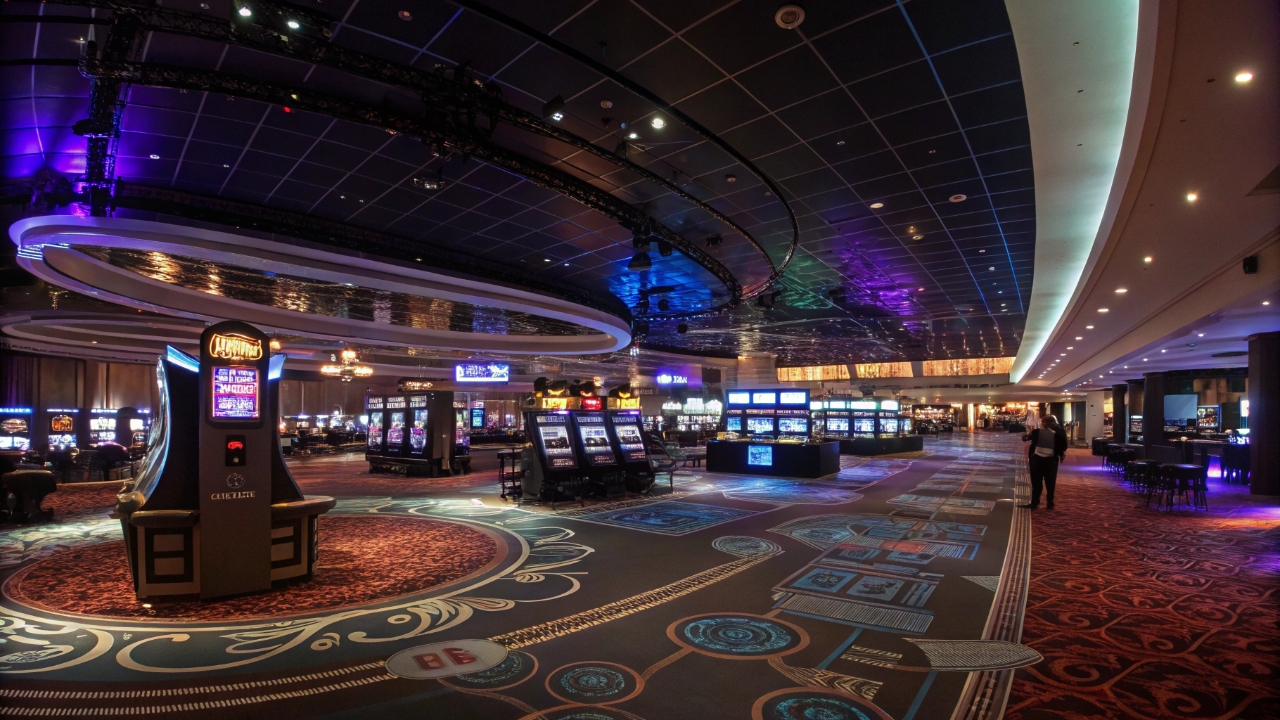
Online casinos developed for a long time around a familiar model: a screen, an interface, a set of slots, and live tables. Virtual reality has changed the logic of interaction itself, because the user no longer watches the game from the outside but is literally placed inside a digital environment. VR casinos create a sense of presence where not only bets and odds matter, but also the atmosphere of the hall, sound, distance to the table, and visual contact with the dealer and other participants. As a result, the gaming experience becomes closer to the land-based format while preserving the convenience of remote access.
The key shift happens at the level of engagement. In a classic app, attention is often scattered, while in a VR headset the player is isolated from external distractions and immersed more deeply in the scenario. This increases the emotional intensity of each session and changes behavioral patterns: users stay longer, test new modes more actively, and return more often because the space feels “alive.” For operators, this means moving from interface design to the architecture of digital worlds, where navigation, movement comfort, and intuitive actions become critical. Competition is no longer based only on bonuses, but also on the quality of immersive environments.
The Technological Foundation of VR Casinos: From Graphics to Secure Payments
Modern VR casinos rely on a combination of several technologies. The first is high-performance 3D graphics with low latency. If the image lags behind head movement, users get tired quickly, so stable frame rates become a critical parameter. The second is spatial audio, which improves orientation in the virtual hall and adds realism. The third is precise tracking systems that allow natural interaction with gaming objects: taking chips, making gestures, choosing tables, and switching camera angles without cumbersome menus.
A separate layer is server infrastructure. Multiplayer VR scenes require stable data channels and real-time synchronization of actions. Even small delays noticeably damage the experience, especially in live disciplines where game flow matters. At the same time, the role of artificial intelligence is increasing: it helps personalize interiors, table selection, and pacing recommendations by analyzing user preferences without complex manual setup. The financial layer is also changing. Payment solutions are becoming faster, while blockchain tools add transparency to transactions and operation history. Even so, cybersecurity remains the core condition: the deeper the digital ecosystem, the higher the requirements for protecting accounts, biometrics, payment data, and anti-fraud mechanisms.
Market Prospects and Limits: What Awaits the Industry Next
In the coming years, VR casinos are likely to grow not only as a technological experiment but as an independent segment of the gambling market. Demand is supported by more affordable hardware, advances in cloud rendering, and audience familiarity with interactive 3D services. A new consumption norm is gradually taking shape, where players expect not just a catalog of games but a complete digital location with social scenarios, personal settings, and real-time events. In this context, brands that invest in content depth gain an advantage: themed worlds, tournament spaces, high-quality avatar communication, and smooth onboarding for newcomers.
However, this growth also has limits and regulatory challenges. Different countries interpret remote gambling differently, and the VR format adds debate about engagement intensity and protection of vulnerable groups. Operators will need to prove that immersion is compatible with responsible gaming principles: limits, transparent session analytics, self-control tools, and clear risk warnings. Design ethics will also be a major factor. The interfaces of the future must maintain a balance between spectacle and safety so users keep control over time and spending.
This balance is where the industry’s real future lies. Virtual reality does not отменяет the core mathematics of gambling, but it radically changes the form of the experience, making it more social, visually rich, and personalized. If the market can combine technological progress with mature standards of regulation and player protection, VR casinos will establish themselves as a full-fledged format of digital entertainment rather than a temporary trend.